

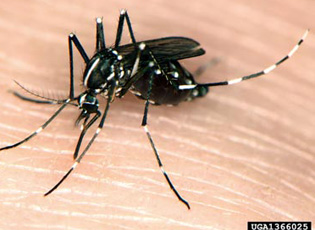
 West Nile Virus is on the rise in the United States, a consequence of the climate change that is bringing more extreme weather conditions to many parts of the country. The Centers for Disease Control report that, “since 1999, 30,000 people have been reported as getting sick with West Nile Virus. Occasionally, an infected person may develop more severe disease such as “West Nile encephalitis” or “West Nile meningitis.” Encephalitis refers to an inflammation of the brain, meningitis is an inflammation of the membrane around the brain and the spinal cord, and meningoencephalitis refers to inflammation of the brain and the membrane surrounding it. Almost 13,000 of the individuals who have been reported as having West Nile virus since 1999 have been seriously ill, and more than 1,200 have died.
There are two ways to protect yourself from mosquitoes: reduce the number of mosquitoes in your area, and reduce your chances of being bitten.
REDUCE BREEDING
Mosquitoes breed anywhere there is standing water. The key to reducing mosquito populations is to limit the places where they can reproduce.
* Empty standing pools of water. Especially after it rains, keep an eye out for standing pools of water that provide perfect breeding grounds for mosquitoes. Those include baby pools, watering cans, old tires, gutters and drains, buckets, and pretty much anything else that can trap water long enough for a mosquito to lay its eggs.
 * Keep water moving in ponds and fountains. Use a small pump to keep water circulating, or put some fish or frogs in the pond to eat up mosquito larvae. Here’s a picture of the pond in my front yard, with the pump sitting right in the middle. (We used to keep fish in the pond, but the neighbor’s dog kept jumping in and stirring things up; the poor fish had a hard time surviving among four paws and a tail!).
* Fill in ditches, trenches and ruts. Like pools and ponds, ditches and ruts also collect water and turn into breeding swamps. Fill them in with gravel or dirt, or drain them into a larger pond where the water can circulate.
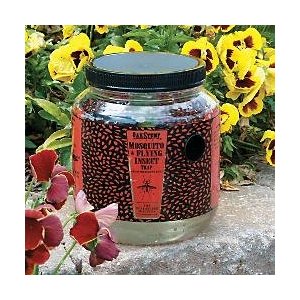 * Set traps. Traps lure mosquitoes into an inescapable container, where they lay their eggs and then die when they can’t escape. My neighbors and I use these Oak Stump Traps by Springstar to good effect. If you can get several neighbors to use the traps, you get more control throughout the neighborhood. Traps are more effective than electric bug zappers, and use less energy, too.
* Attract animals and other insects that eat mosquitoes. Bats and birds are famous for eating millions of mosquitos, but so do dragonflies. Put up bat bird houses to provide more nesting areas for these friendly creatures, and plant flower gardens to attract dragonflies.
REDUCE BITING
 1) First, cover up. The less skin you expose, the less likely you are to get bitten. If you’re working in your garden, mowing your lawn, watering your bushes, or hiking in the woods, wear shoes, socks, lightweight pants, a lightweight, long-sleeved shirt with a collar, and a hat. If you’re sitting on the porch or at an outdoor event and don’t want to wear long pants or long sleeves, drape a light-weight shawl or scarf over your legs or arms. As much as possible, spray your clothes, not your skin (and launder when you get in the house).
2) Light citronella candles or run a small fan when you’re sitting outside. You may still need to squirt bug spray on your ankles and legs, but the candles will emit an aroma that helps keep mosquitoes away from your arms and face. The more candles, the better. A small rotating fan will create enough of a breeze to blow mosquitos away while you’re on your porch or patio.
3) If you’re the do-it-yourself type, pick up a bottle of an essential oil like eucalyptus, lavender, citronella, or geraniol, or try some combination. Get a 4- or 6-ounce pump bottle; add somewhere between 10 and 20 drops of each oil to a couple of ounces of water or rubbing alcohol and shake well. Spray on exposed skin, always avoiding your face. (Pay attention: some herbal oils may irritate the skin. Find one that works for you. I found lavender oil and vanilla worked well for me, which I wrote about here.)
4) Try one of the herbal repellents available in most grocery, hardware, and gardening stores, or order online. They generally cost about the same as conventional, pesticide-based sprays. Consumer Reports analyzed the effectiveness of various bug sprays, and found that Repel, which relies on lemon and eucalyptus to deter bites, is just as effective as brands that contain more toxic chemicals. (We sell Repel in our Amazon store here.)
5) If you feel you must use something stronger than essential oils, choose a product containing Picaridin, which does not seem to irritate the skin the same way DEET does. Always use the lowest concentration that will work for you. Here’s why you should never use DEET or other pesticides on infants or children. If you need a sunscreen as well as a repellent, apply them separately, rather than use one product that contains both, as the sunscreen may contain a more potent repellent than what you might normally use. Wash your hands immediately after applying.
You can find more non-toxic mosquito repellents and traps in our Amazon store here. And please, let us know what works for you!
(Disclosure: We earn a tiny commission on our Amazon store sales, which helps us continue to maintain our blog at no cost to you.)











3 thoughts on “Simple, Non-Toxic Ways to Protect Yourself from West Nile Virus”
Good tips! We use homemade oil or spray as repellent.
THANK YOu for this! We are surrounded by three natural preserves and need a lot of protection from the never-ending appetites of the mosquitoes around here!
Oh yes, I seriously hate mosquitoes. Their bites could drive me nuts. Tips shared are greatly appreciated.
Comments are closed.